
📖
Opening Shelf & Fetching Catalog...
Connecting to For The Truth theological registry...
Connecting to For The Truth theological registry...
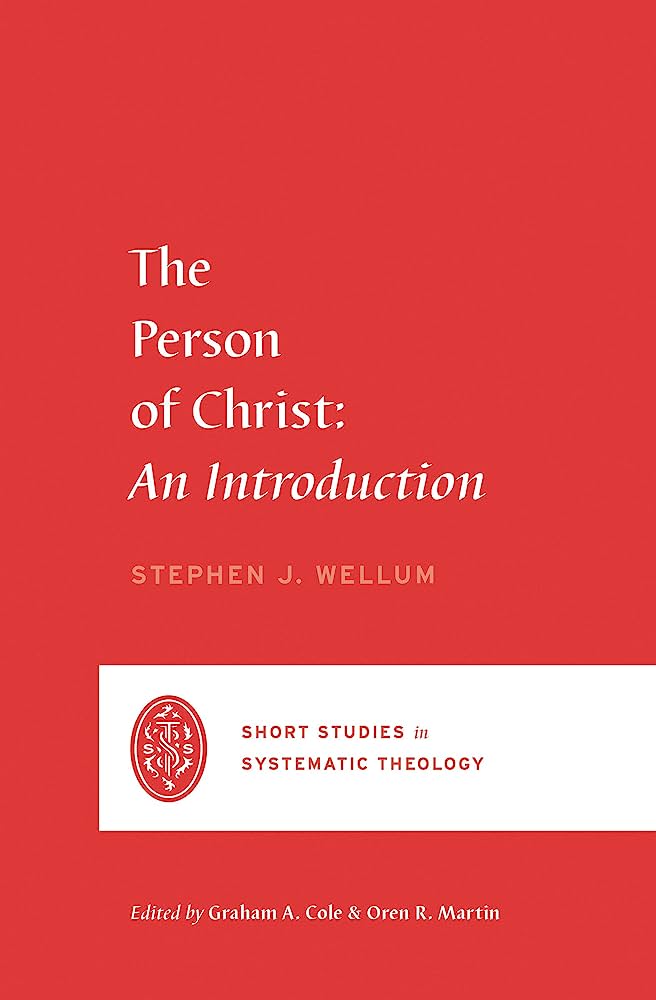
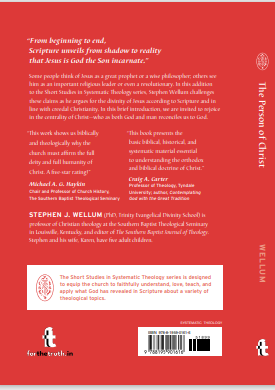
The Person of Christ: From beginning to end, Scripture progressively reveals the journey from shadow to reality, depicting Jesus as the incarnate God the Son.
Part of the Short Studies in Systematic Theology Series
EMI from ₹42/month
Pay later available

Some say he was a great prophet — one of the finest teachers of ethical and spiritual wisdom the world has ever produced. Others see him as an important religious leader, the founder of a movement that has shaped civilisations. Some treat him as a revolutionary, a first-century social reformer whose vision of equality and justice still speaks to the margins. A few dismiss him as a myth — a legendary figure whose historical reality is questionable.
And then there is the claim that the Bible makes, that the earliest Christians staked their lives on, and that the creeds of the church have articulated and defended for two thousand years: that Jesus of Nazareth is the eternal Son of God, the second person of the Holy Trinity, who became fully human without ceasing to be fully divine, in order to reconcile sinful humanity to God.
This claim is either the most important truth in the universe — or it is the most audacious error. There is no comfortable middle ground. And The Person of Christ: An Introduction by Stephen Wellum is a carefully argued, biblically grounded, and genuinely accessible case for why the Christian claim is true — and why the alternative accounts of Jesus fall short of the evidence and the logic of the biblical narrative.
The question of who Jesus is — his identity, his nature, and his relationship to God — is not a question that Christians can treat as peripheral or optional. It is the question on which everything else depends. Get Christology wrong and the gospel unravels — because the gospel is not simply a set of ethical principles or a religious programme. It is the announcement that the eternal Son of God became flesh, lived a fully human life, died a substitutionary death, and rose bodily from the dead — and that in him, and in him alone, sinful human beings can be reconciled to God.
A Jesus who is merely a great teacher cannot save. A Jesus who is only a moral exemplar cannot bear the weight of the world's sin. A Jesus who is a created being — however exalted — cannot bridge the infinite gap between Creator and creature. Only the Jesus of the Bible — fully God and fully man, the eternal Son who took on human nature in the incarnation — can do what the gospel says he has done.
Wellum makes this case with rigour, clarity, and the pastoral conviction of someone who understands that Christology is not just academic theology but the foundation of Christian worship, Christian hope, and Christian life.
One of the distinctive and important features of this book is its consistent engagement with both Scripture and creedal Christianity. Wellum is a careful exegete who grounds his argument in the biblical text — working through the key Christological passages of the Old and New Testaments and showing how they build a cumulative case for the full divinity and full humanity of Jesus Christ.
But he also takes the creeds seriously — not as authorities equal to Scripture but as the church's careful, Spirit-guided summary of what Scripture teaches about who Jesus is. The Nicene Creed, the Chalcedonian Definition, and the broader tradition of creedal Christology are not obstacles to fresh biblical engagement. They are the fruits of centuries of careful biblical reflection — and engaging with them is one of the best ways of ensuring that our reading of Scripture benefits from the wisdom of the whole church rather than just our own moment.
This combination — exegetical rigour and creedal accountability — gives the book a theological stability and a historical rootedness that treatments of Christology that ignore either the Bible or the tradition rarely achieve.
At the heart of The Person of Christ is Wellum's careful engagement with the central mystery of the incarnation: that Jesus Christ is one person with two natures — fully and completely divine, fully and completely human. This is the claim that the Chalcedonian Definition articulated in 451 AD, and it is the claim that Wellum defends as the only account of Jesus that does justice to the full witness of Scripture.
He addresses the questions and objections that this claim generates: If Jesus is fully God, how could he grow in wisdom? How could he be tired? How could he not know the hour of his return? If Jesus is fully human, how can he be without sin? How can he be worshipped? How can his death atone for the sins of others?
Wellum handles each of these questions with the care, biblical grounding, and theological precision that they require — showing that the two-natures Christology of the creeds is not a philosophically motivated distortion of the biblical Jesus but the most coherent and most biblically faithful account of who Jesus actually is.
The tone of the book is captured in its opening invitation — to rejoice in the centrality and divinity of Christ. Wellum is not merely defending a theological position. He is inviting readers into the wonder of the incarnation — the astonishing reality that the eternal Son of God, through whom all things were created and in whom all things hold together, became a human being in order to bring his people back to God.
This doxological dimension gives the book a warmth and a personal urgency that purely academic Christology often lacks. The goal of studying who Jesus is, for Wellum, is not theological correctness for its own sake but a richer, deeper, more grounded adoration of the one in whom God has been fully revealed and in whom sinful humanity has been fully redeemed.
"Stephen Wellum writes with the clarity of a master teacher and the heart of a devoted worshipper. This introduction to the person of Christ is both rigorous and doxological — exactly what the church needs." — Consistent reader response
"This is the book I give to people who want to understand who Jesus really is. Wellum handles the hard questions with care and always brings the reader back to worship." — Consistent pastor response
Stephen J. Wellum is Professor of Christian Theology at The Southern Baptist Theological Seminary in Louisville, Kentucky — one of the world's largest and most influential evangelical seminaries. He is one of the most respected Christologists and systematic theologians in contemporary evangelical Christianity, and the author and co-author of several major theological works including God-Man-Servant, Kingdom through Covenant (co-authored with Peter Gentry), and Christ Alone: The Uniqueness of Jesus as Savior. His scholarship is characterised by rigorous exegetical engagement, deep commitment to creedal orthodoxy, and a consistent pastoral concern that theology should lead to deeper worship of and faithfulness to the Lord Jesus Christ. His contribution to The Person of Christ: An Introduction reflects his lifelong scholarly devotion to Christology and his gift for making its depths accessible and personally transforming for ordinary Christian readers.
The Person of Christ: An Introduction is part of the Short Studies in Systematic Theology series from Crossway — a collection of brief, academically rigorous, and accessible introductions to key areas of Christian theology. Other volumes available through For The Truth include Faithful Theology and Glorification by Graham Cole, The New Creation and the Storyline of Scripture by Frank Thielman, The City of God and the Goal of Creation by T. Desmond Alexander, The Son of God and the New Creation by Graeme Goldsworthy, and The Attributes of God by Gerald Bray.

The Big Picture Story Bible
₹999

The Friend Who Forgives Coloring and Activity Book
₹249

God's Very Good Idea - Colouring and Activity Book
₹249

The Awesome Super Fantastic Forever Party Art and Activity Book
₹249

The Garden, the Curtain and the Cross Easter Calendar
₹249

Matthew's Gospel (ESV) - Booklet
₹199
Sold out