📖
Opening Shelf & Fetching Catalog...
Connecting to For The Truth theological registry...
Connecting to For The Truth theological registry...
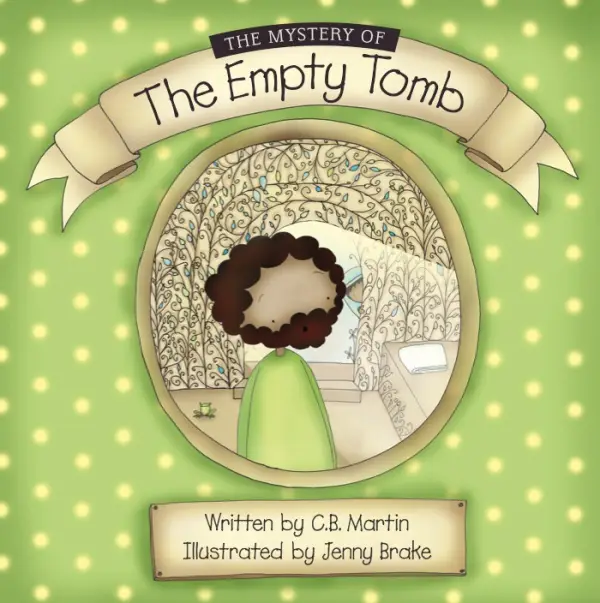
The Easter story told through Barabbas—the man Jesus took the place of. A fun, gospel-centred Easter resource for children. Perfect for families & church.
EMI from ₹42/month
Pay later available

There was once a bad man named Barabbas.
He had done terrible things — the kind of things that had consequences, the kind of things that meant he was going to pay the highest possible price. He sat in his cell knowing what was coming. There was no escape, no argument, no second chance. Justice was on its way, and justice was going to find him.
And then something happened that Barabbas could not explain.
A man who had never done anything wrong was brought in. A man whose name was Jesus. A man who, instead of walking free as Barabbas had done a thousand times in his imagination, was taken out to die — in the very place, at the very time, under the very sentence that had been meant for Barabbas.
Barabbas walked out of that prison a free man. And he had not earned it, deserved it, or done anything to make it happen. The innocent man had taken his place. It was, as far as Barabbas could tell, a complete mystery.
But the mystery was not over. Because Jesus had made a promise — a promise that sounded impossible, a promise that no one who had really died had ever been able to keep. He said that after three days he would come back to life.
Would he keep it?
The Mystery of The Empty Tomb is a wonderfully imaginative and genuinely gospel-rich Easter storybook for children that tells the story of Jesus' death and resurrection through the uniquely powerful perspective of Barabbas — the man who experienced substitution not as a theological concept but as the most personal, most astonishing, most life-changing reality he had ever encountered.
Of all the ways to tell the Easter story, the choice to tell it through Barabbas is inspired — and not just because it is fresh and memorable.
Barabbas makes the substitutionary heart of the gospel concrete, personal, and impossible to miss.
When Barabbas walked out of prison on Good Friday, he was not walking out because of anything good about himself. He was walking out because someone else had taken his place — someone innocent, someone who had done nothing wrong, someone who was going to die the death that Barabbas had earned. The exchange was total and it was personal: your death for mine, your condemnation for my freedom, your life for whatever comes next for me.
That is exactly what the gospel says happened for every person who puts their faith in Jesus. Not in a vague, metaphorical sense — but in the specific, substitutionary, personally costly sense that Barabbas experienced in the most vivid way imaginable. Jesus took his place. And Jesus takes ours.
By telling the Easter story through Barabbas, The Mystery of The Empty Tomb gives children a concrete, story-based, personally resonant way to begin understanding what substitution means — and why the empty tomb is not just a historical curiosity but the resolution of the deepest mystery in the universe: how can a bad person go free?
The story does not end with the cross. It never does.
Jesus made a promise — strange, specific, and seemingly impossible — that after three days he would come back to life. Children listening to this story arrive at the same question that everyone who heard that promise must have asked: would he keep it?
The empty tomb is the answer. Not a mystery in the sense of something inexplicable or uncertain — but a mystery in the sense of something so extraordinary, so beyond ordinary expectation, so completely unprecedented that it stops everyone who encounters it in their tracks and demands a response.
The tomb is empty. The promise was kept. The man who took Barabbas' place did not stay dead.
And that changes everything — for Barabbas, and for every child who hears this story and begins to understand that the Jesus who took Barabbas' place is the same Jesus who offers to take theirs.
The Mystery of The Empty Tomb is ideal for:
One of the most valuable things about The Mystery of The Empty Tomb is the way it holds together what can sometimes feel like competing goals in children's Easter resources: being genuinely fun and engaging for children, and being genuinely faithful and theologically serious about what Easter means.
The story of Barabbas is inherently dramatic — a man on death row, a last-minute reprieve, an innocent man taking his place, a body that goes missing from a sealed tomb. Children do not need to have the significance explained to them before they are interested. The story itself is interesting. And the theological depth — the substitution, the promise, the resurrection — is not imposed on the story from outside but is woven into its very fabric, there to be discovered and returned to as children grow in their capacity to understand it.
This is what the best children's Easter resources do — they tell the story well enough that the truth it carries can do its own work in a young heart, at whatever level that heart is ready to receive it.
The empty tomb is the answer to Barabbas' mystery — and to the deepest mystery of every human heart.
How can someone who has done wrong be truly, completely, justly free? Not overlooked or excused or given a pass — but genuinely, legally, finally free, with the debt paid and the sentence lifted and nothing held over them?
The answer the empty tomb gives is the same answer it gave to Barabbas: because someone else paid it. Because the one who took his place did not stay dead. Because the promise was kept and the tomb is empty and the guilty man goes free.
The Mystery of The Empty Tomb gives children their first encounter with that answer — told through a story that is warm enough for a young child, dramatic enough for an older one, and true enough for every age.