
📖
Opening Shelf & Fetching Catalog...
Connecting to For The Truth theological registry...
Connecting to For The Truth theological registry...
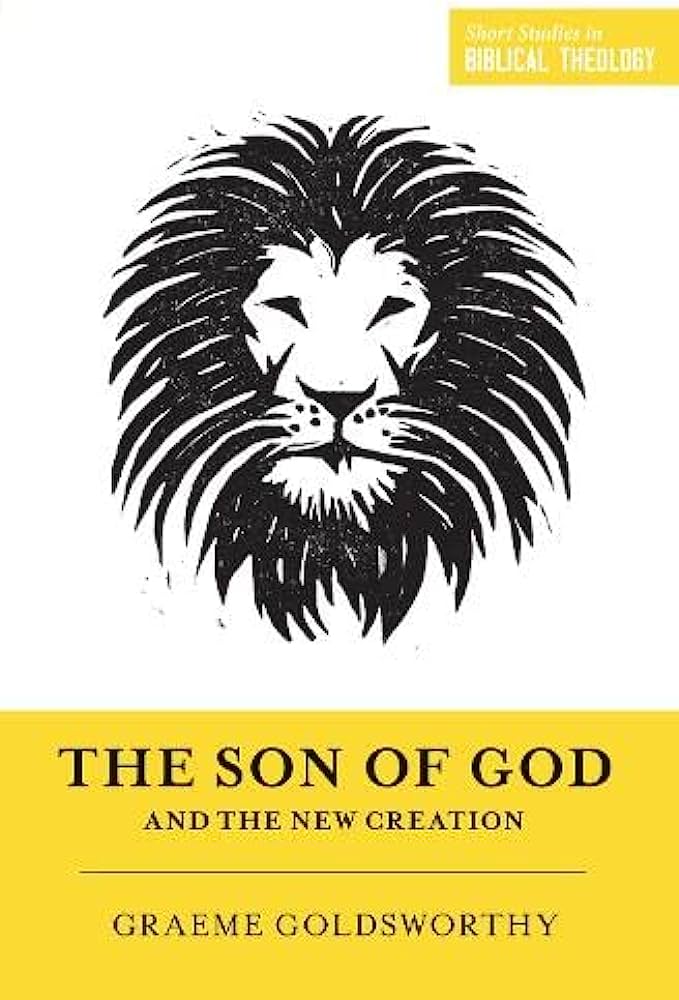
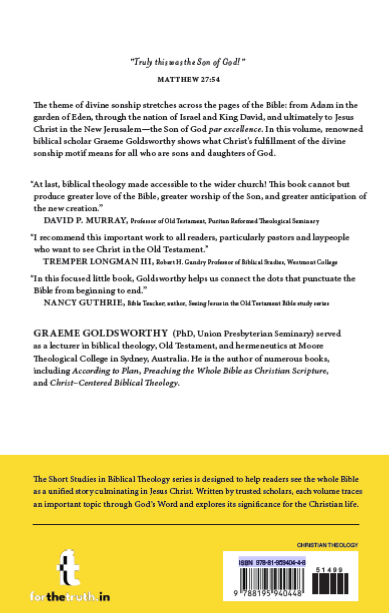
The Son of God and the New Creation by Graeme Goldsworthy traces the powerful theme of sonship throughout the Bible—from Adam, Israel, and David to its perfect fulfillment in Jesus Christ. Goldsworthy shows how Jesus is the true Son of God who succeeds where others failed, and how believers become God’s sons and daughters through faith in Him.
Part of the Short Studies in Biblical Theology Series
EMI from ₹42/month
Pay later available

What does it mean to be a son of God? The question sounds simple. The answer turns out to be one of the richest and most far-reaching threads in the entire Bible — a theme that begins in the garden of Eden, runs through the history of Israel and the dynasty of David, reaches its climax and fulfilment in Jesus Christ, and extends to embrace every person who is united to him by faith.
The Son of God and the New Creation by Graeme Goldsworthy is a concise, biblically careful, and theologically profound exploration of this theme — one of the most important and most comprehensive in all of Scripture. Part of the Short Studies in Systematic Theology series from Crossway, it brings the gifts of one of the most respected biblical scholars and biblical theologians of the twentieth and twenty-first centuries to bear on a subject that illumines the whole of the biblical story and transforms how Christians understand their own identity in Christ.
Goldsworthy is uniquely qualified to write this book. Over a distinguished career spanning several decades, he has done more than almost any other evangelical scholar to develop and commend the discipline of biblical theology — the reading of Scripture as a unified, coherent narrative in which every part contributes to the unfolding revelation of God's redemptive purposes in Christ. His landmark works including Gospel and Kingdom and Preaching the Whole Bible as Christian Scripture have shaped a generation of pastors, teachers, and biblical scholars worldwide.
In The Son of God and the New Creation, he applies this approach to the theme of divine sonship — showing how it functions as a thread that runs through both testaments, gathering meaning and depth at every stage, until it finds its ultimate and definitive expression in the person of Jesus Christ.
Goldsworthy traces the sonship theme through five key stages of biblical revelation:
Adam — the first son of God The Gospel of Luke traces Jesus's genealogy back to Adam, whom it calls "the son of God." This is not incidental. Adam was made in God's image — created to reflect God's character and represent God's rule throughout creation. His sonship was the foundation of his calling and his identity. The fall was not merely a moral failure but a failure of sonship — a refusal of the obedience, trust, and dependence on God that being a son required.
Israel — the son of God as nation When God called Israel out of Egypt, he called them his firstborn son (Exodus 4:22). Israel's history becomes, in this light, a corporate enactment of the sonship calling — a nation summoned to live in the obedience, trust, and dependence on God that Adam had forfeited. Israel's repeated failures to fulfil this calling deepened the need for a son who would succeed where Adam and Israel had failed.
David and his dynasty — the son of God as king The Davidic covenant introduced a new and concentrated expression of the sonship theme: the king of Israel as the son of God in a special sense (2 Samuel 7:14; Psalm 2:7). The king was to embody for the whole nation what the nation was called to embody for the whole world — perfect filial obedience, trust, and dependence on God. The failure of the Davidic kings pointed forward to the need for a king who would fulfil this calling completely.
Jesus — the Son of God par excellence In Jesus Christ, every anticipatory and partial expression of divine sonship finds its perfect fulfilment. He is the true Adam who obeyed where Adam failed. He is the true Israel who fulfilled the calling where Israel fell short. He is the true Davidic King who reigns in perfect filial obedience. And he is the eternal Son of God — the one who did not merely bear the title of sonship but embodies it in his very being. Goldsworthy shows how the whole trajectory of the sonship theme in the Old Testament converges in Christ and how his fulfilment of it transforms its meaning for all who are united to him.
Believers — sons and daughters of God in Christ The final movement of the theme is perhaps the most personally transforming: what Christ's fulfilment of the divine sonship motif means for all who are sons and daughters of God. Through union with Christ, believers are adopted into the divine family — sharing in his sonship, his inheritance, and his destiny. The new creation is the context in which this adopted sonship will be fully and gloriously revealed, when the sons and daughters of God are finally and completely conformed to the image of the Son.
One of the most important pastoral contributions of this book is what it offers to Christians who want to understand their own identity in Christ. The language of adoption and divine sonship is not peripheral to the New Testament's account of what it means to be a Christian — it is central. Christians are those who have been given the right to become children of God (John 1:12), who have received a spirit of adoption (Romans 8:15), and who are heirs of God and co-heirs with Christ (Romans 8:17).
Understanding the sonship theme — where it comes from, how it developed, and how it is fulfilled in Christ — gives this identity language its full biblical depth. Christians are not sons and daughters of God in some vague or sentimental sense. They are participants in the same sonship that runs through the whole of Scripture — adopted into the family of the one who is the Son of God par excellence, sharing his inheritance and his destiny.
Graeme Goldsworthy is Adjunct Professor of Biblical Theology at Moore Theological College in Sydney, Australia, and one of the most influential and widely respected biblical theologians in the evangelical world. Over a career spanning more than four decades, he has developed and commended the discipline of biblical theology through landmark works including Gospel and Kingdom, Gospel and Wisdom, The Gospel in Revelation, Preaching the Whole Bible as Christian Scripture, According to Plan, and Gospel-Centred Hermeneutics. His work has shaped the biblical theology of generations of pastors, teachers, and scholars — particularly in the evangelical tradition that has grown from Moore College and its theological offspring. The Son of God and the New Creation represents his contribution to the Short Studies in Systematic Theology series — and it brings the full weight of his biblical-theological method and decades of textual engagement to bear on one of Scripture's most important and most comprehensive themes.
The Son of God and the New Creation is part of the Short Studies in Systematic Theology series from Crossway — a collection of brief, academically rigorous, and accessible introductions to key areas of Christian theology. Other volumes available through For The Truth include Faithful Theology and Glorification by Graham Cole, The New Creation and the Storyline of Scripture by Frank Thielman, The City of God and the Goal of Creation by T. Desmond Alexander, and volumes on the attributes of God and theological method.
Sanctification as Set Apart and Growing in Christ
₹349
The Sabbath as Rest and Hope for the People of God
₹299
Divine Blessing and the Fullness of Life in the Presence of God
₹299
From Chaos to Cosmos: Creation to New Creation
₹299
The Lord's Supper as the Sign and Meal of the New Covenant
₹299
Marriage and the Mystery of the Gospel (Damage)
₹349