📖
Opening Shelf & Fetching Catalog...
Connecting to For The Truth theological registry...
Connecting to For The Truth theological registry...
Part of the Short Studies in Systematic Theology Series
EMI from ₹42/month
Pay later available

Of all the questions a human being can ask, the most important is also the most ancient: What is God like?
Not what we imagine him to be. Not what our culture projects onto him. Not the vague, comfortable deity of popular spirituality — endlessly tolerant, morally undemanding, available on request. But the God who actually exists — the God who made the heavens and the earth, who spoke through the prophets, who sent his Son, who will judge the living and the dead. What is he like?
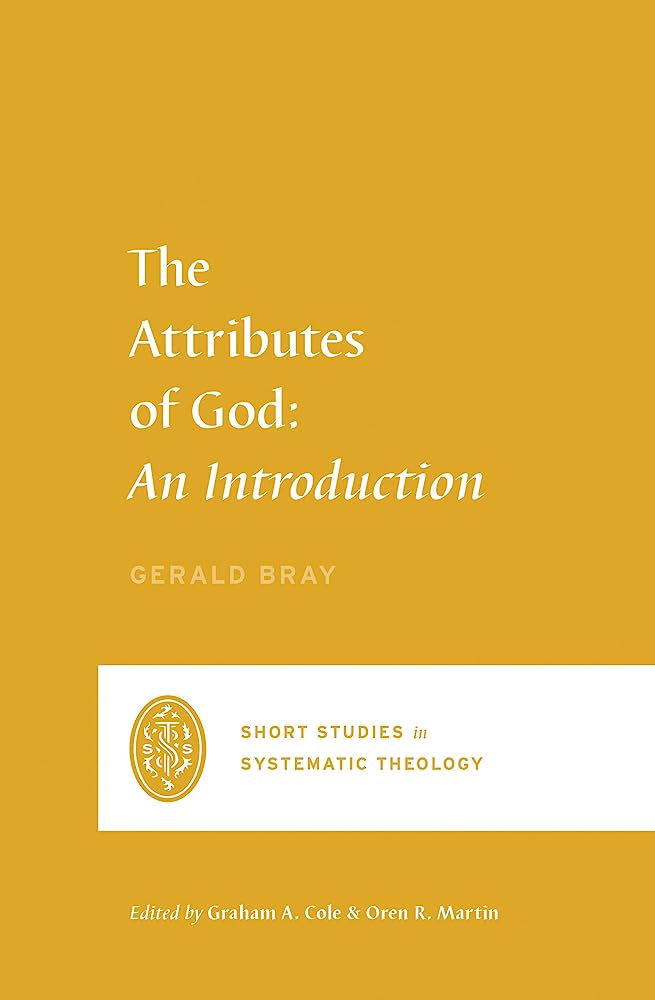
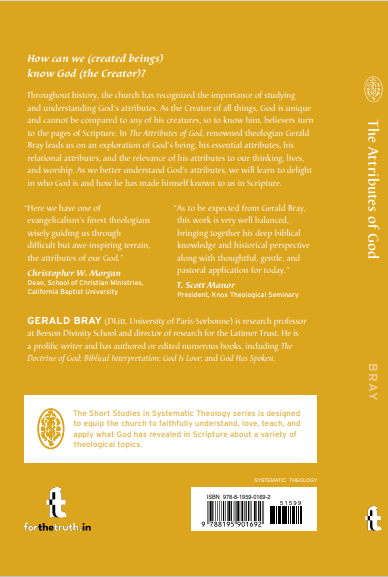
Throughout the history of the church, Christians have answered this question by carefully studying the attributes of God — the qualities and characteristics that Scripture reveals about who God is and what he is like. And in The Attributes of God: An Introduction, one of the most respected theologians in contemporary evangelical Christianity leads readers through this rich and life-transforming study with the clarity, depth, and pastoral warmth that only a lifetime of serious theological engagement can produce.
Gerald Bray begins from a conviction that has shaped Christian theology since its earliest days: God is unique. He cannot be compared to any of his creatures. He is not simply a bigger or better version of human beings — more powerful, more knowing, more lasting. He is qualitatively different from everything he has made — the uncreated Creator, the self-sufficient source of all that exists, the one in whom all perfections are not attributes added to a being but the very substance of what he is.
This conviction shapes everything about how Bray approaches the study of God's attributes — and everything about why the study matters. To know God's attributes is not an academic exercise for theological specialists. It is the most practical thing a Christian can do — because what we think about God shapes everything about how we live, how we worship, how we pray, how we face suffering, and how we understand the gospel.
As Bray shows throughout the book, a richer understanding of God's attributes produces richer worship — because we are praising someone we actually know rather than a vague spiritual principle. It produces deeper prayer — because we are approaching a God whose character we understand and whose purposes we trust. And it produces more stable faith — because our confidence is grounded not in our experience but in who God is, unchangeably and eternally.
The book is structured to take readers on a comprehensive and carefully ordered exploration of God's attributes — moving from the foundations of what God's being is to the qualities that distinguish him as God, and then to the qualities through which he enters into relationship with his creatures:
God's Being — the foundational questions about what it means to say that God exists, what kind of existence he has, and how his existence differs from that of everything he has made. Bray addresses God's self-existence, his infinity, his eternity, and his simplicity — the classical attributes that distinguish the Creator from the creation.
God's Essential Attributes — the qualities that belong to God by virtue of what he is: his omniscience, his omnipotence, his omnipresence, his immutability, and his holiness. Bray opens each of these with the exegetical care of a biblical scholar and the theological precision of someone who has spent decades teaching systematic theology — making difficult concepts genuinely accessible without reducing their depth.
God's Relational Attributes — the qualities through which God enters into relationship with his creatures: his love, his grace, his mercy, his patience, his faithfulness, and his justice. This section is where the study of God's attributes becomes most directly personal and devotional — where the reader encounters not just who God is in himself but who he is toward us, and is invited to respond with the delight and trust that a proper knowledge of God always produces.
The Relevance of God's Attributes — the final movement of the book, which draws out the implications of what has been learned for the Christian's thinking, life, and worship. Bray is consistent throughout in insisting that theology is never merely academic — it is always for the sake of knowing God more truly, loving him more deeply, and living more faithfully before him.
Gerald Bray is one of the most respected and widely read theologians in the contemporary evangelical world — the author of major works on systematic theology, church history, and biblical theology, and a contributor to some of the most important theological projects of the last thirty years. His scholarship is deep, his learning is wide, and his commitment to biblical fidelity is unwavering.
But what makes The Attributes of God: An Introduction so valuable for ordinary Christians is that Bray also writes with pastoral warmth and genuine accessibility. He does not assume that his readers have theological training. He explains technical terms. He grounds abstract concepts in Scripture. He draws out implications for worship and daily life. And he writes throughout with the conviction that the goal of studying God's attributes is not more knowledge about God but deeper delight in God — the kind of delight that only comes from truly knowing him.
The Attributes of God is described as an introduction — and it fulfils that description admirably. It is accessible enough to serve as a first engagement with the theology of God for a new Christian or a layperson with no theological background, and substantive enough to serve as a grounding and orientation for those who want to go deeper in their understanding of who God is.
It is also an ideal foundation for further theological study — providing the framework of God's attributes that makes every other area of Christian doctrine more coherent and more personally meaningful. Readers who work through this book will find that their understanding of the gospel, of prayer, of suffering, of the church, and of the Christian life is enriched and deepened by the clearer, more biblically grounded understanding of God they have gained.
Gerald Bray is Research Professor of Divinity at Beeson Divinity School in Birmingham, Alabama, and one of the most respected systematic theologians in the contemporary evangelical world. He is the author of numerous widely-read books including God Is Love: A Biblical and Systematic Theology, The Doctrine of God, Creeds, Councils and Christ, and the God Has Spoken series. He is also a general editor of the Reformation Commentary on Scripture series and has spent decades teaching systematic theology, historical theology, and patristics at the highest academic level. His scholarship is characterised by rigorous engagement with the biblical text, deep knowledge of the church's theological tradition, and a consistent pastoral concern that theology should lead to doxology — to the worship and delight in God that genuine knowledge of him always produces.