📖
Opening Shelf & Fetching Catalog...
Connecting to For The Truth theological registry...
Connecting to For The Truth theological registry...
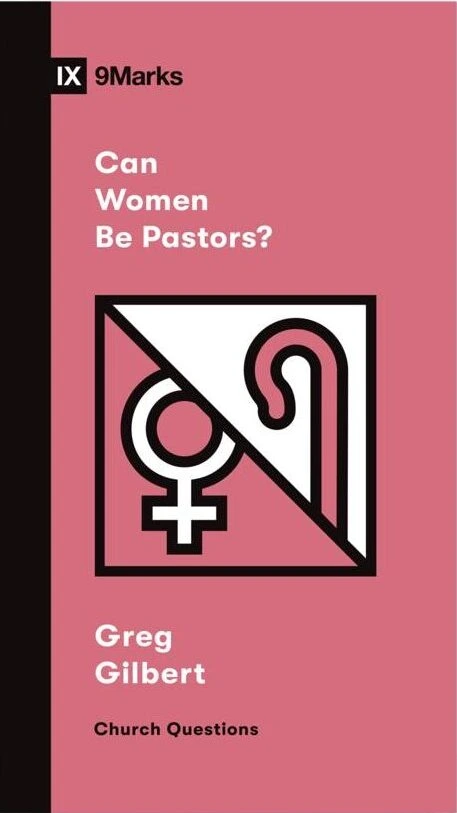
Few questions in the contemporary church generate more heat — or more genuine confusion — than this one.
It is a question that touches on deeply personal convictions about dignity, calling, gifting, and the nature of God's design for human beings. It is a question that divides denominations, splits congregations, and generates passionate disagreement among people who share the same commitment to Scripture and the same love for Jesus Christ. And it is a question that every church — and every Christian — will eventually have to engage with honestly and carefully.
Can Women Be Pastors? by Greg Gilbert is a concise, accessible, and genuinely helpful booklet from the 9Marks Church Questions series that engages this question with the biblical seriousness, the theological care, and the pastoral sensitivity it deserves. Gilbert does not sidestep the controversy or pretend the question is simpler than it is. He goes directly to the biblical texts that address it most clearly — Genesis 1 to 3 and 1 Timothy 2 — and shows why the office of pastor and elder, as Scripture defines it, is reserved for men, not as an arbitrary restriction but as part of God's good and beautiful design for his church.
The question of whether women can be pastors is not merely an internal church debate about organisational structure. It touches on some of the most fundamental questions in Christian theology:
What does Scripture actually teach? The authority and sufficiency of the Bible is at stake in every discussion of this question. How readers handle the relevant texts — whether they take them at face value, read them through a cultural lens that relativises their force, or engage in more creative hermeneutical approaches — reveals a great deal about their underlying convictions about what kind of book the Bible is and what authority it carries.
What does creation tell us? Gilbert's approach begins not with the New Testament but with Genesis — with the structures of authority and relationship that God established in the creation of human beings as male and female before the fall. The argument is that what the New Testament teaches about church leadership is not a cultural accommodation or a temporary restriction but a reflection of an order that is written into the very fabric of creation.
What is the office of pastor? One of the most important clarifications Gilbert makes is about what the question is actually asking. It is not a question about whether women can teach, preach, lead, exercise spiritual gifts, or serve in countless vital and significant ways in the life of the church. It is a specific question about the office of pastor and elder — the specific governing and teaching office that Scripture defines in particular ways and for which Scripture specifies particular qualifications.
Understanding what the question is really asking — and what it is not — is essential for engaging with it honestly and productively. And this booklet helps every reader do exactly that.
From Genesis 1 to 3 — The Order of Creation Gilbert begins where the apostle Paul begins — not with culture or tradition but with creation. In Genesis 1 and 2, God creates human beings as male and female — equal in dignity, equal in bearing his image, genuinely complementary in their design. And within that equality and complementarity, God establishes an order — a pattern of authority and relationship between man and woman that is not a consequence of the fall but part of the original goodness of creation.
This order — the man created first, the woman created as a helper fit for him, the man given the name that encompasses both — is not incidental to the creation narrative. It is woven into its very fabric. And when Paul addresses questions of church leadership in his letters to Timothy and Titus, he consistently grounds his teaching not in the cultural circumstances of first-century Ephesus but in this creation order — which is why, Gilbert argues, the teaching cannot be dismissed as culturally conditioned.
From 1 Timothy 2 — The Apostolic Teaching The most direct New Testament text on this question is 1 Timothy 2, where Paul instructs that he does not permit a woman to teach or to exercise authority over a man and immediately grounds that instruction in the order of creation and the events of the fall. Gilbert examines this passage carefully and honestly — engaging with the interpretive questions it raises and showing why the most natural, most contextually sensitive, and most theologically coherent reading of the text supports the view that the office of pastor and elder is reserved for men.
The Design Behind the Restriction Crucially, Gilbert does not present this as a bare restriction — a divine fiat with no intelligible rationale. He shows why God's design for church leadership is not arbitrary but part of a larger, coherent, beautiful vision of how God has made human beings as male and female and how that making is reflected in the structures of both the family and the church. The restriction is not a demotion of women or a statement about their lesser worth or lesser spiritual capacity. It is part of a design in which men and women are different — genuinely, beautifully, complementarily different — and in which those differences are reflected in different but equally honourable and equally significant roles.
Can Women Be Pastors? is essential reading for:
Greg Gilbert writes on this subject with the awareness that it is genuinely contested among sincere Christians who share a commitment to Scripture and a love for the church. He does not treat those who hold different views as enemies of the gospel or as theological lightweights who have simply failed to read the relevant texts. He engages the question seriously, presents the biblical case honestly, and writes with the kind of charitable, respectful tone that a subject of genuine disagreement among genuine believers requires.
This tone is itself part of what makes the booklet valuable — it models the kind of biblically grounded, theologically serious, relationally gracious engagement with a contested question that the church at its best has always practised.
Greg Gilbert is the senior pastor of Third Avenue Baptist Church in Louisville, Kentucky, and the author of several books including What Is the Gospel? and Who Is Jesus? He is known for his ability to communicate complex biblical and theological content with clarity, accessibility, and genuine pastoral warmth. In Can Women Be Pastors?, he brings those gifts to one of the church's most contested contemporary questions — with results that are both theologically trustworthy and genuinely practically helpful.
Can Women Be Pastors? is part of the 9Marks Church Questions series — eagerly commended by leading evangelical voices — a collection of short, accessible, biblically grounded booklets that answer the questions that curious Christians and thoughtful seekers most commonly ask about the faith, the church, and the Christian life.
Other titles in the Church Questions series available at forthetruth.in include:
The question of whether women can be pastors is, at its deepest level, a question about whether God's design for his church is good — whether the structures he has established for how his people gather and are led reflect his wisdom and his love or merely the cultural assumptions of a patriarchal past.
Gilbert's answer is clear and confident: God's design is good. The structures of authority he established in creation, reflected in the ordering of the family and the church, are not arbitrary limitations on human flourishing but part of a vision of human life — male and female, different and complementary, each bearing the image of God in their own way — that is genuinely beautiful and genuinely life-giving when it is embraced rather than resisted.
Can Women Be Pastors? is an invitation to see that design clearly — and to find in it not a restriction to be overcome but a gift to be received.