📖
Opening Shelf & Fetching Catalog...
Connecting to For The Truth theological registry...
Connecting to For The Truth theological registry...
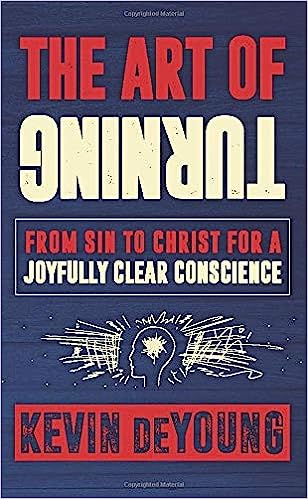
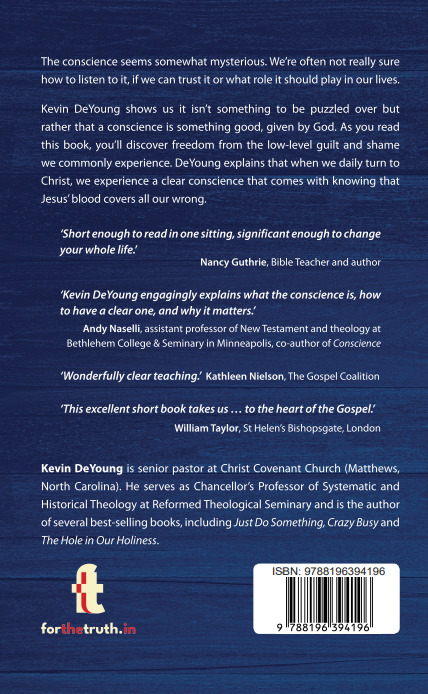
Kevin DeYoung shows how a clear conscience comes through daily turning to Christ. A short, life-changing booklet on guilt, shame & the blood of Jesus.
EMI from ₹42/month
Pay later available

Most Christians live with a low-level hum of guilt.
It is not always dramatic — not the acute, crushing guilt of a specific major failure, though that exists too. It is something quieter and more persistent than that. A background noise. A vague sense that something is not quite right. A feeling of being slightly off — slightly less than what God expects, slightly behind on the spiritual to-do list, slightly too aware of the gap between who you are and who you know you are supposed to be.
This low-level guilt is so common among believers that many have come to accept it as simply part of the Christian life — an inevitable accompaniment to genuine faith in a holy God. And alongside it runs a companion feeling: shame. The sense not just of having done something wrong but of being something wrong. Of being deficient in a way that is not easily fixed.
The Art of Turning by Kevin DeYoung is a short, sharp, and genuinely liberating booklet that addresses these experiences directly — and that offers, from the pages of Scripture, a vision of the conscience and of the Christian life that makes genuine freedom from this low-level guilt not just a theological possibility but a daily, personal, accessible reality.
Short enough to read in one sitting. Significant enough to change your whole life.
One of the reasons that guilt and shame are such persistent companions for so many Christians is that the conscience itself is genuinely puzzling. Most people are not quite sure what to do with it.
Is the conscience a reliable guide? Should you always follow it? What happens when your conscience condemns you for something that Scripture does not explicitly forbid? What happens when your conscience seems strangely quiet about something that you know is genuinely wrong? Can the conscience be trusted? Can it be trained? And what role should it play in the daily decisions and the daily experience of a Christian who genuinely wants to please God?
These are real questions. And the fact that they are rarely addressed directly — that the conscience is rarely taught on with the clarity and the thoroughness it deserves — is itself part of why so many Christians remain confused and burdened by it.
Kevin DeYoung addresses the confusion directly. He shows that the conscience is not something to be puzzled over or treated with suspicion. It is something good — a gift from God, designed to serve a specific and genuinely valuable purpose in the life of every believer. Understanding what that purpose is, and how the conscience is meant to function in relation to the Word of God and the grace of the gospel, is the key to finding the freedom from guilt and shame that Christ has already secured.
The first and most important thing DeYoung establishes about the conscience is that it is not an enemy to be silenced or a burden to be escaped. It is a gift from God — part of how he has designed human beings to function as moral agents in his world.
The conscience is the internal faculty by which a person registers the moral quality of their own thoughts, words, and actions. It is the voice that says — sometimes loudly, sometimes quietly — that was wrong, or you should not have done that, or you need to make this right. It serves the essential function of keeping a person morally and spiritually accountable — pointing them back toward God, toward repentance, toward the grace that is always available in Christ.
But the conscience can malfunction. It can be overactive — generating guilt about things that are not genuinely sinful, burdening believers with scruples and anxieties that Scripture does not warrant. It can be underactive — becoming seared and insensitive through repeated choices to ignore its warnings, so that a person no longer feels the appropriate weight of genuine wrongdoing. It can be misdirected — shaped by cultural expectations, family patterns, or religious traditions rather than by the Word of God.
Understanding these dynamics — knowing what a healthy, properly calibrated, gospel-shaped conscience looks like — is essential for navigating the Christian life with both genuine holiness and genuine freedom. And The Art of Turning provides exactly that understanding.
At the heart of this booklet is DeYoung's description of what he calls the art of turning — the daily, deliberate, grace-dependent practice of turning to Christ with whatever the conscience brings, and finding in his blood the complete and permanent covering of every wrong.
This is not a technique or a spiritual formula. It is the simple, profound, endlessly available act of repentance — of bringing what is genuinely wrong before God in honest acknowledgment, trusting in the sufficiency of Christ's atoning work, and receiving the forgiveness and the clear conscience that his blood secures.
The blood of Jesus covers all our wrongs. Not most of them. Not the smaller ones or the accidental ones or the ones we feel bad enough about. All of them. Every failure of thought and word and action. Every falling short of God's standard. Every sin — whether the conscience is loudly condemning it or has become so familiar with it that it barely registers any more.
When a believer understands this — when they truly grasp that the blood of Christ is genuinely sufficient for everything their conscience brings — something remarkable happens. The low-level hum of guilt begins to fade. Not because the sins were not real, but because the covering is complete. Not because the standard has been lowered, but because the one who met the standard has given his righteousness to those who trust in him.
That is the freedom DeYoung is pointing toward. And The Art of Turning is an invitation to walk in it — daily, deliberately, in the grace that Christ has already secured.
Perhaps the most personally significant contribution of this booklet is what it offers to the Christian who has been living under the quiet, persistent weight of low-level guilt and shame that so many believers carry as an unexamined companion through their Christian lives.
DeYoung distinguishes carefully between the guilt that the conscience produces as it is doing its proper job — pointing to genuine sin and calling for genuine repentance — and the guilt that lingers after repentance has happened and forgiveness has been received. The first kind of guilt is a gift. It is the conscience functioning as God designed it — leading a person to Christ. The second kind of guilt is not from God. It is a failure to receive what Christ has already given — a refusal, perhaps unconscious, to believe that the blood of Jesus is truly sufficient.
Shame operates similarly. The shame that drives a person toward repentance and toward Christ is healthy. But the shame that says you are permanently defined by your failures, that you are irreparably deficient, that the forgiveness Christ offers is available in principle but somehow not quite available to you — that shame is a lie. And The Art of Turning helps every reader identify that lie for what it is and replace it with the truth of the gospel.
The Art of Turning is essential reading for:
Kevin DeYoung is the senior pastor of Christ Covenant Church in Matthews, North Carolina, and a council member of The Gospel Coalition. He is the author of numerous widely read and widely trusted books including Just Do Something, Crazy Busy, The Hole in Our Holiness, and Taking God at His Word. He is known for his ability to communicate deep biblical and theological truth with clarity, wit, and genuine practical usefulness — and The Art of Turning reflects all of those qualities in a format that is accessible to every reader, however busy or however burdened they may be.
There is something fitting about the format of The Art of Turning.
A booklet about the daily art of turning to Christ — about the short, simple, grace-dependent practice of bringing everything to Jesus and finding in him the covering and the freedom that nothing else can provide — does not need to be long. It needs to be clear. It needs to be honest. It needs to be genuinely grounded in the gospel and genuinely applied to the real experience of real believers living with real consciences in a real world.
Kevin DeYoung has written exactly that. And the result is a booklet that can be read in a single sitting — but that, if genuinely received and genuinely applied, has the potential to change the entire tone and the entire experience of a Christian's daily life.
Because the art of turning is not complicated. It is simply this: bring what you have to the one who covers all of it. And discover — again, and again, and again — that his blood is enough.