📖
Opening Shelf & Fetching Catalog...
Connecting to For The Truth theological registry...
Connecting to For The Truth theological registry...
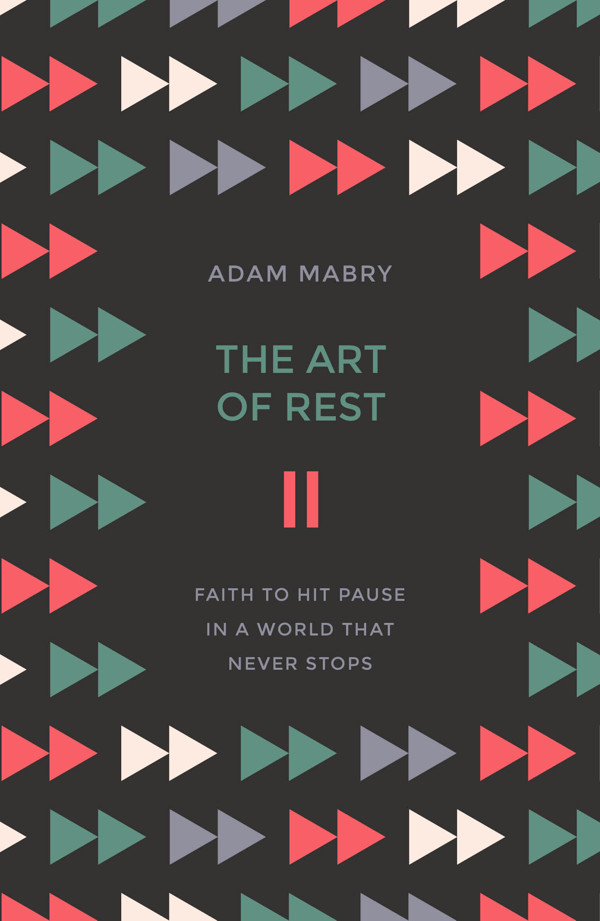
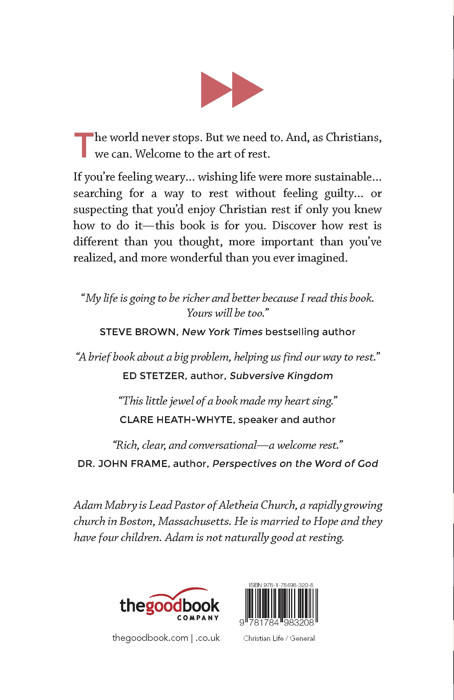
Adam Mabry shows how rest fuels joy, relationships & trust in God. A warm, realistic guide to the spiritual rewards of rest. Essential Christian living book.
EMI from ₹42/month
Pay later available

The world never stops.
Notifications arrive at midnight. Work follows us home on devices we carry everywhere. The pressure to be productive, to be available, to be achieving something — is constant, relentless, and almost entirely normalised. Rest feels like failure. Stopping feels like falling behind. And for many Christians, the busyness is not merely cultural but spiritual — driven by a quiet, unexamined conviction that their value before God is somehow connected to how much they are doing for him.
The result is a generation of Christians who are exhausted, chronically overstretched, spiritually dry, and quietly burning out — and who are not entirely sure they have permission to do anything about it.
The Art of Rest by Adam Mabry gives them that permission — warmly, realistically, with genuine humour and genuine biblical depth — and then shows them something better than mere permission: a vision of rest so rich, so spiritually rewarding, and so deeply rooted in the character and purposes of God that it transforms the very idea of stopping from a reluctant concession to an act of joyful, grace-saturated faith.
Mabry begins by honestly naming the different ways different people relate to rest — and recognising that the problem looks different for different people even though the solution is the same:
For some, rest feels like a waste of time. There are other things to do — better things, more productive things, more important things. Stopping means missing out, falling behind, letting other people down. Rest is not a gift to be received but a loss to be minimised.
For others, rest feels like a luxury they cannot afford. The demands on their time are simply too great — too many responsibilities, too many people depending on them, too much that genuinely needs to be done. Rest is something they will get to eventually, when the pressure lifts. Which it never quite does.
For almost all of us, we crave rest but do not know how to find it. We know we need to stop. We can feel the cost of not stopping. But the attempts we make at rest — the holidays that do not refresh, the weekends that disappear into more busyness, the quiet times that feel guilty rather than peaceful — do not seem to deliver the genuine renewal we are looking for.
Mabry addresses all three of these experiences — with the warm, self-aware, sometimes self-deprecating honesty that makes this book feel less like a lecture and more like a conversation with a trusted friend who understands the problem from the inside.
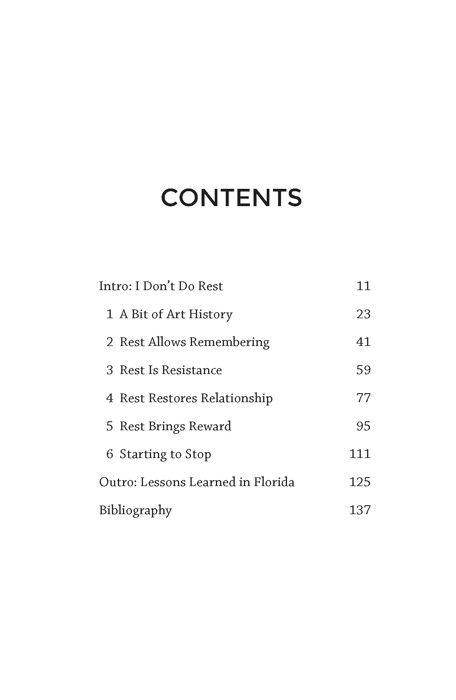
At the heart of The Art of Rest is a vision of rest that is simultaneously more demanding and more liberating than most of us have encountered.
Rest is not primarily the absence of activity. It is not simply doing nothing, or stopping work, or taking a holiday. It is — at its deepest level — a theological act: a declaration, made with the body and the calendar as much as with words, that the world does not depend on us, that God is sovereign, that his grace is sufficient, and that our worth is not measured by our productivity.
When a Christian rests — genuinely, deliberately, faithfully rests — they are doing something that the watching world finds genuinely strange and genuinely countercultural: they are trusting God with the outcome. They are saying, with their stopped work and their unhurried presence, that the universe will continue to be sustained while they sleep, that the kingdom of God does not depend on their unceasing effort, and that the God who rested on the seventh day has built rest into the rhythm of creation because rest is good — not just pragmatically useful but intrinsically, theologically, relationally good.
What makes The Art of Rest genuinely motivating — rather than merely guilt-inducing — is the way Mabry consistently focuses not on the obligation to rest but on its extraordinary rewards. He shows, with both biblical grounding and genuine personal honesty, what genuine rest actually produces:
Time with God and remembrance of his grace Rest creates the space — in a life that is otherwise relentlessly full — for the kind of unhurried, receptive, genuinely attentive encounter with God that the busyness of ordinary life makes so difficult. It is in rest that we remember who God is and who we are in relation to him — not what we have achieved but what he has given.
Fuelled joy and confidence in God's sovereignty The person who never rests is, at some level, living as though everything depends on them. Rest is the antidote — the regular, embodied practice of trusting that God is sovereign and that his purposes will prevail regardless of whether we are working or sleeping. That trust, practised habitually, produces the kind of deep, settled, unshakeable joy that no amount of achievement can manufacture.
Liberation from the pressure of self-reliance One of the most spiritually destructive forces in the contemporary Christian life is the quiet conviction that if we just worked harder, prayed more, gave more, did more, we would finally be enough. Rest interrupts that conviction with the gentle, insistent reminder that we were never supposed to be enough on our own — that the whole point of the gospel is that Christ is enough, that his grace is sufficient, and that our stopping is not a failure but a form of faith.
Space for relationships and shared experiences Rest makes room for the people who matter most — for the unhurried conversations, the shared meals, the memories that are made not in productivity but in presence. Mabry shows how rest is not just personally restorative but relationally essential — the soil in which the deepest and most enduring human connections are cultivated.
The chance to think, reflect, and be renewed In a life of constant activity, there is never enough space to actually process what is happening — to grieve properly, to celebrate properly, to learn from experience, to grow in self-awareness and in wisdom. Rest creates that space.
Protection from burnout This is perhaps the most practically urgent reward for many readers — the simple, biological, spiritual reality that human beings are not machines, that we have genuine limits, and that ignoring those limits consistently produces consequences that are serious and sometimes irreversible. Rest is not self-indulgence. It is stewardship of the body and the soul that God has entrusted to us.
One of the most important contributions of The Art of Rest is its insistence on approaching rest as a rhythm rather than a rule — as an art form rather than a regulation.
Rules about rest — observe the Sabbath in these specific ways, do not do these specific things — can produce either legalism or guilt without producing the genuine, restorative, faith-nourishing rest they are meant to protect. What Mabry offers instead is a vision of rest that is woven into the fabric of a Christian life — not an occasional event marked on a calendar but a regular, sustainable, personally shaped rhythm of stopping that fits the specific contours of each person's life and responsibilities.
This means that rest looks different for different people. It means it requires wisdom and intentionality rather than simply following a prescribed formula. And it means that learning to rest well is genuinely an art — something that has to be practised, refined, and developed over time rather than achieved once and then simply maintained.
Mabry offers practical suggestions for developing that art — not as a new set of obligations but as a set of invitations to discover for yourself the extraordinary spiritual, emotional, and physical rewards that genuine rest produces.
The Art of Rest is essential reading for:
Adam Mabry is the lead pastor of Aletheia Church in Boston, Massachusetts, and the author of several books including Stop Asking Jesus into Your Heart companion material. He writes with the kind of warm, honest, self-aware voice that makes even the most demanding challenges feel genuinely approachable — and with a genuine pastoral concern for the real, daily struggles of real Christians trying to follow Jesus in a relentlessly busy world. In The Art of Rest, he brings all of those qualities to a subject that he clearly knows from personal experience as well as theological conviction.
The world never stops. The notifications keep arriving. The demands keep multiplying. The pressure to keep going, keep producing, keep achieving — never quite lets up.
But we need to stop. And as Christians, we can — not reluctantly, not guiltily, not as a concession to weakness — but boldly, joyfully, faithfully. Because the God who rested on the seventh day has built rest into the fabric of creation. Because the Christ who invites the weary to come to him offers genuine, soul-level rest. Because the Holy Spirit who dwells in us is the source of a renewal that no amount of our own effort can produce.
The Art of Rest is an invitation to stop — and to discover that stopping, done in faith and shaped by grace, is one of the most spiritually powerful things a Christian can do.