📖
Opening Shelf & Fetching Catalog...
Connecting to For The Truth theological registry...
Connecting to For The Truth theological registry...
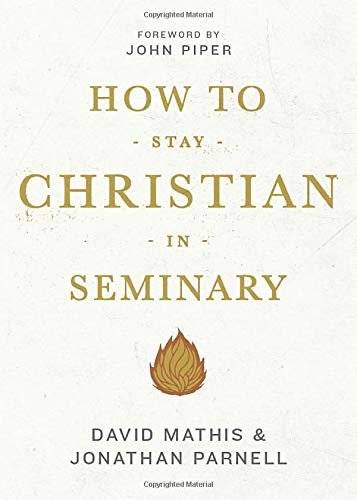
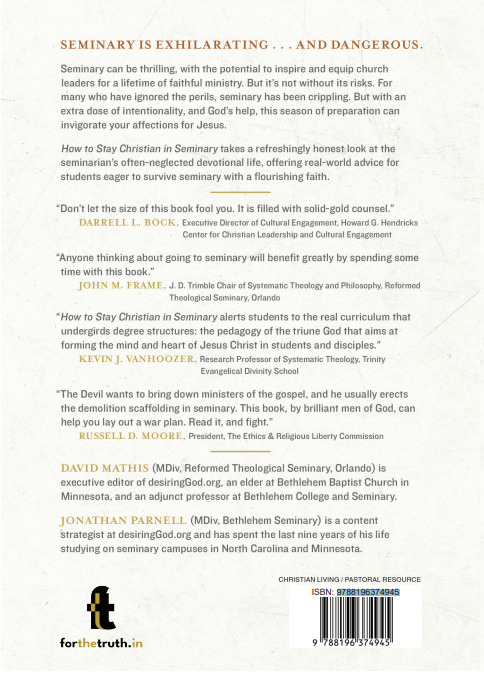
An honest guide for seminary students on surviving with flourishing faith. Real-world advice on devotional life, affections for Jesus & spiritual vitality.
EMI from ₹42/month
Pay later available

Seminary is one of the most significant seasons in the preparation of a pastor or church leader.
It is a season of extraordinary opportunity — the chance to study the Word of God with depth and rigour, to be shaped by serious theological education, to grow in the knowledge and the love of the God who has called you to ministry, and to be equipped for a lifetime of faithful service to his church. For many students, it is the most intellectually stimulating, spiritually formative, and personally transforming season of their entire lives.
But seminary also carries risks that few people talk about honestly — and that many students discover only when they are already in the middle of them.
The risk of studying the Bible so academically that it stops speaking personally. The risk of learning so much about God that you stop actually talking to him. The risk of developing sophisticated theological categories for every dimension of the Christian life while the devotional life itself quietly withers. The risk of entering seminary with a vibrant, personal, affection-driven faith — and emerging with a technically proficient theology and a cold, dry, professionally competent ministry that has somehow lost the thing that made it worth doing in the first place.
How to Stay Christian in Seminary is a refreshingly honest, practically wise, and genuinely helpful guide for seminary students who want to do more than just survive theological education — who want to emerge from it with their faith not just intact but flourishing, their affections for Jesus not diminished but deepened, and their eagerness for ministry not drained but invigorated.
When prospective seminary students think about the challenges ahead, they typically think about the obvious ones. The academic workload. The financial pressure. The adjustment to a new city or institution. The challenge of balancing study with family, church, and the other responsibilities of ordinary life.
These are real challenges. But they are not the most serious risk that seminary poses for the faith and the ministry of those who attend it.
The most serious risk is subtler, more insidious, and more spiritually significant than any of them. It is the risk of what happens when the study of God gradually crowds out the enjoyment of God — when theological education, pursued without sufficient intentionality about the devotional life, slowly but surely transforms the student from a person who loves Jesus into a person who knows about Jesus with great technical precision but has somehow lost the warmth, the wonder, and the personal intimacy that originally drove them to ministry.
This is not a hypothetical danger. It has happened to enough seminary graduates — men and women who entered theological education with genuine fire and emerged competent but cold — that it deserves to be taken seriously as a genuine risk of the seminary experience. And How to Stay Christian in Seminary takes it seriously — naming it honestly, examining it carefully, and offering practical, wise, genuinely helpful guidance for students who are determined not to let it happen to them.
At the heart of the danger is what this book identifies as the seminarian's most commonly neglected dimension of life: the devotional life.
In seminary, the Bible becomes a text to be studied, analysed, exegeted, and interpreted. And that is right and necessary — the rigorous academic engagement with Scripture that theological education provides is genuinely valuable and genuinely important for the formation of faithful ministers of the Word. There is no contradiction between serious academic engagement with the Bible and genuine devotional engagement with it.
But they require different postures. And the posture of the student — critical, analytical, always looking for the technical insight, always preparing to write the paper or pass the exam — can, without deliberate intentionality, crowd out the posture of the worshipper — receptive, dependent, reading slowly not to understand the argument but to hear the voice of God and to be changed by what he says.
The student who never shifts out of academic mode — who never allows the Bible they are studying so carefully to speak to them personally, who never brings their own heart and their own struggles and their own need to the text they are dissecting — is a student whose devotional life is withering, whether they notice it or not.
How to Stay Christian in Seminary helps students notice. And it helps them develop the habits, the rhythms, and the intentionality that keep the devotional life genuinely alive through the pressures of theological education.
What makes this book particularly valuable is its commitment to genuine, practical, real-world advice — not idealised prescriptions that assume seminary students have unlimited time and perfect spiritual discipline, but honest, achievable, specifically applicable guidance for students who are genuinely busy, genuinely pressured, and genuinely trying to hold together multiple competing demands on their time and energy.
The book addresses the specific, concrete questions that seminary students actually face:
How do you read the Bible devotionally when you have been reading it academically all day? The transition from exegetical analysis to personal encounter with God is real and it requires intentionality. The book offers practical guidance for making that transition — for shifting gears from the student's posture to the worshipper's posture, even when the same text is in front of you.
How do you maintain genuine prayer when your understanding of prayer has become so theologically sophisticated that spontaneous, heartfelt conversation with God feels inadequate? Theological education can sometimes make simple things feel impossibly complicated. The book addresses this specifically — helping students recover the simplicity and the authenticity of genuine prayer even as their understanding of it deepens.
How do you stay genuinely connected to a local church when seminary culture can make church feel like just another academic context? The church is not a laboratory for ministry observation — it is the community in which every minister of the gospel must be genuinely embedded as a member, a servant, and a worshipper. The book addresses how to maintain genuine, not merely professional, participation in local church life during the seminary years.
How do you keep your love for the people you are preparing to serve alive when the pressures of academic performance can make ministry feel abstract and distant? One of the subtler risks of seminary is the way it can gradually replace the genuine, person-centred love for the congregation that drives faithful pastoral ministry with a more abstract, academic orientation toward ideas, arguments, and theological systems. The book addresses this directly and practically.
How do you maintain genuine friendship and genuine community when the competitive, individualistic culture of academic environments can make both difficult? The seminary years can be surprisingly lonely — full of people who are theoretically committed to community and practically absorbed in their own academic pressures. The book offers honest, practical guidance for cultivating genuine friendship and genuine mutual accountability during this season.
How to Stay Christian in Seminary is essential reading for:
Seminary is a gift. The opportunity to study the Word of God with rigour and depth, to be shaped by serious theological education, to be equipped for a lifetime of faithful ministry — these are genuine gifts that should be received with gratitude and engaged with full seriousness.
But gifts can be misused. And the gift of theological education, pursued without sufficient intentionality about the devotional life, can produce something that nobody intended and everybody should fear: a minister who knows everything about God and has somehow lost the personal relationship with him that makes ministry genuinely life-giving rather than merely professionally competent.
How to Stay Christian in Seminary is a guide for students who refuse to let that happen — who are determined to receive the gift of theological education without losing the fire that drove them to ministry in the first place. Who want to emerge from seminary not just equipped but genuinely, personally, affectionately alive to the God they are preparing to serve.
The keys are not complicated. They require intentionality rather than genius, consistency rather than heroism, and a genuine, daily, unhurried returning to the Jesus who called them — not just to study him but to know him, love him, and walk with him through every demanding, pressured, intellectually stimulating, spiritually significant day of the seminary years.