
📖
Opening Shelf & Fetching Catalog...
Connecting to For The Truth theological registry...
Connecting to For The Truth theological registry...
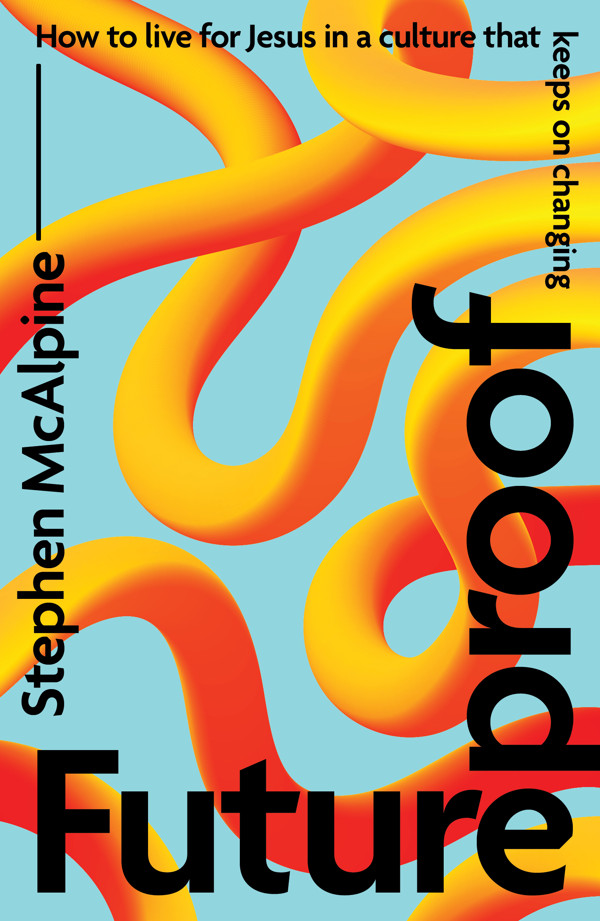
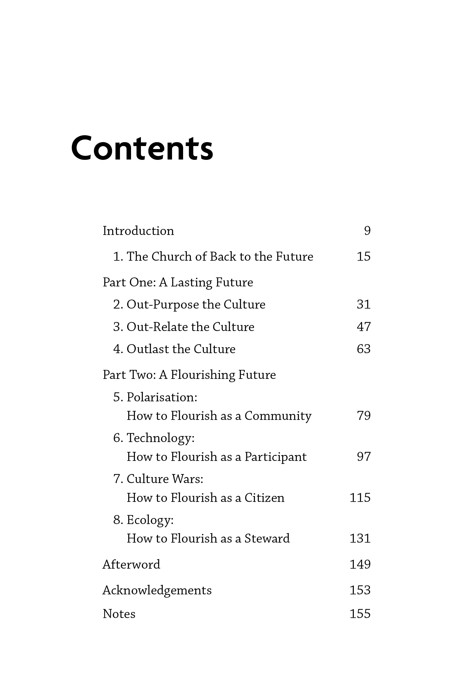
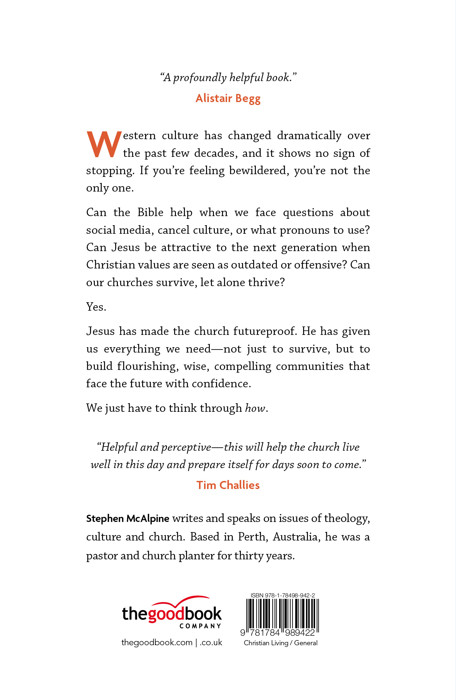
Stephen McAlpine shows how the gospel equips Christians to face cultural change with confidence. A hopeful guide to living for Jesus in uncertain times.
EMI from ₹42/month
Pay later available

The world is changing faster than at any point in living memory.
The cultural ground beneath our feet is shifting — and for many Christians, the pace and direction of that change feels deeply unsettling. Views that were once mainstream are now considered dangerous. Beliefs that were simply assumed a generation ago are now treated as bigotry. The church that once shaped Western culture now finds itself pushed to its margins, regarded with suspicion, and increasingly pressured to abandon the convictions that have defined it for two thousand years.
It is enough to make any thoughtful Christian anxious about the future.
But what if the future is not something to fear? What if the changes sweeping through our culture — as disorienting as they feel — are not outside God's control or beyond the reach of his purposes? And what if the Bible offers not just comfort in the face of those changes but a genuinely better, more satisfying, and more hope-filled vision of human life, meaning, and future than anything secular culture can provide?
That is the compelling and ultimately joyful argument of Futureproof by Stephen McAlpine — a book that equips Christians to face the future not with anxiety but with confidence, clarity, and gospel-rooted hope.
Futureproof is Stephen McAlpine's follow-up to his widely read first book Being the Bad Guys — which sought to explain how Western culture ended up so far from biblical Christianity and how Christians can engage wisely and winsome with the gospel in that environment.
Where Being the Bad Guys diagnosed the present situation — explaining how we got here and what it means — Futureproof looks forward: where are things heading? What challenges are coming? And what does faithful, confident, hope-filled Christian living look like in the face of those challenges?
Together, the two books form a comprehensive and biblically grounded guide to understanding and navigating the cultural moment the church finds itself in — and to doing so with the kind of courage, wisdom, and genuine hope that only the gospel can produce.
One of the most valuable contributions of Futureproof is its careful examination of the secular narratives that increasingly shape how people in our culture understand themselves, their lives, and their future.
McAlpine examines four of the most powerful of these narratives:
Purpose and Authenticity The secular world tells us that the meaning of life is found by looking inward — by discovering our true self, expressing our authentic identity, and building a life that feels genuinely ours. It is a compelling narrative. But McAlpine shows that it is also a deeply unsatisfying one — unable to provide the stable foundation for identity and purpose that it promises, and ultimately leaving those who follow it more lost, not less.
The Bible offers something far better: a purpose that is not discovered by looking inward but received as a gift from the God who made us and called us by name — a purpose that is stable, meaningful, and oriented toward something far greater than self-expression.
Connectedness Technology promises to make us more connected than any generation in human history — and in some ways, it delivers. But McAlpine examines the ways in which our hyper-connected digital world has also produced epidemic levels of loneliness, anxiety, and superficial relationships that cannot bear the weight of genuine human need.
The Bible's vision of community — embodied, committed, costly, and rooted in the love of God — is not a relic of a pre-digital age. It is a more realistic and more satisfying answer to the human longing for genuine belonging than anything a social media platform can provide.
Progress The secular narrative of progress — the assumption that humanity is moving inevitably toward a better, fairer, more enlightened future through technology, education, and the right social policies — has deep roots in Western culture and enormous cultural power. But McAlpine examines the ways in which this narrative is increasingly struggling to account for the evidence — the persistence of injustice, the fragility of social progress, the capacity of technology to harm as well as heal.
The Bible's vision of hope is not naive optimism about human potential. It is grounded in the certain promises of the God who is sovereign over history and who has guaranteed the future through the resurrection of Jesus Christ.
Futureproof does not shy away from the specific and serious challenges that are causing anxiety among both Christians and thoughtful non-Christians about the future. McAlpine examines them honestly and directly:
Technological change — artificial intelligence, biotechnology, surveillance, and the ways in which rapid technological development raises profound questions about what it means to be human, who has power, and what kind of future we are building.
Political polarisation — the deepening divisions in democratic societies that make genuine civic conversation increasingly difficult and that threaten to reshape the political landscape in ways that have significant implications for religious freedom and Christian witness.
Climate and creation — the debates around environmental stewardship, what faithfulness to God's calling as image-bearers means in the face of genuine ecological challenges, and how Christians can lead the way in caring for creation without simply adopting secular frameworks.
Gender and identity — perhaps the most acute and personally felt of all the cultural fault lines, where the pressure on Christians to affirm views that contradict their biblical convictions is most immediate and most costly.
In each case, McAlpine does not simply reassure readers that everything will be fine. He takes the challenges seriously — and then shows how the gospel provides not just comfort but a genuinely better framework for understanding and responding to each one.
Futureproof is essential reading for:
Stephen McAlpine is a pastor, writer, and cultural commentator based in Perth, Australia. He writes widely on the intersection of Christianity and culture and is known for his ability to combine careful biblical thinking with sharp cultural observation in a way that is both intellectually serious and genuinely accessible. His first book Being the Bad Guys was widely praised for its clarity, relevance, and gospel-centred engagement with the challenges facing the church in a post-Christian culture. Futureproof builds on that foundation and takes the conversation further — looking ahead with the kind of honesty and hope that the church urgently needs.
The secular world has its stories about the future — stories of technological salvation, progressive enlightenment, and the gradual triumph of the right values over the wrong ones. They are compelling stories in many ways. But they are also stories that are increasingly struggling to deliver on their promises — and that leave those who live by them more anxious, more fragmented, and more uncertain about the future than any previous generation.
The Bible has a better story. A story rooted not in human potential but in divine faithfulness. A story whose ending is guaranteed not by the arc of history but by the resurrection of Jesus Christ. A story that gives its readers not blind optimism but genuine, grounded, unshakeable hope.
Futureproof is an invitation to know that story deeply enough to live by it — to face the future not with anxiety but with the quiet, confident, gospel-rooted hope that belongs to every person who knows who holds tomorrow.