₹499.00Original price was: ₹499.00.₹299.00Current price is: ₹299.00.
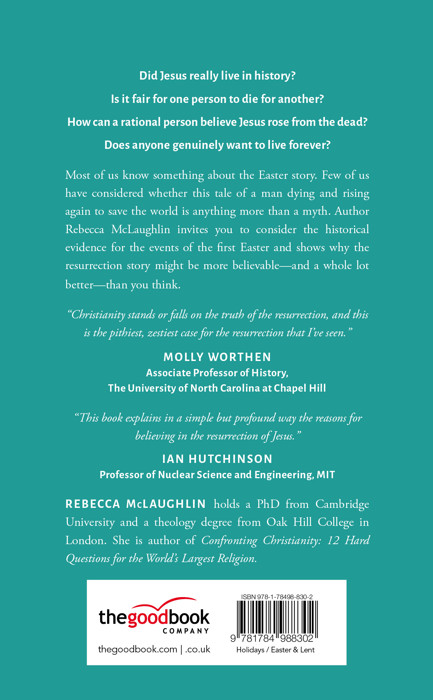
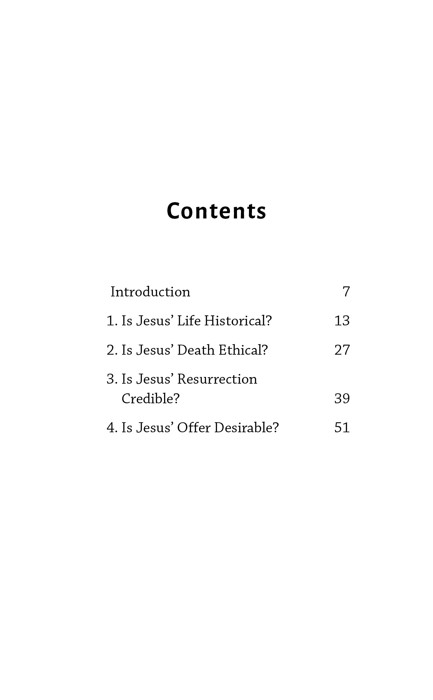
Cambridge PhD Rebecca McLaughlin outlines the evidence for Jesus’ resurrection. A concise, compelling Easter apologetics book. Perfect for outreach & new Christians.
Is Easter Unbelievable? — The Evidence That Jesus Really Did Rise from the Dead
The resurrection of Jesus from the dead is an extraordinary claim.
A man crucified by the Romans on a Friday afternoon — publicly, verifiably, in front of witnesses — was alive again on Sunday morning. Not resuscitated. Not hallucinated. Not merely remembered or symbolically present in the hearts of his grieving followers. Physically, bodily, historically alive — talking, eating, being touched, appearing to individuals and to crowds of more than five hundred people before ascending to the right hand of the Father.
If it is true, it is the most important event in the history of the universe. If it is not true, then as Paul says with characteristic directness, Christian preaching is useless, Christian faith is pointless, and Christians are — of all people — most to be pitied.
There is no middle ground. Either Jesus rose from the dead or he did not. And the question of which is true is not a matter of personal preference or religious taste. It is a question of historical fact — and it deserves a serious, honest, evidence-based answer.
Is Easter Unbelievable? by Rebecca McLaughlin provides exactly that answer — concisely, accessibly, and with the intellectual rigour and genuine warmth that have made McLaughlin one of the most trusted and most effective Christian apologists of our generation.
Why the Resurrection Demands a Verdict
The temptation, in a pluralistic culture, is to treat the resurrection as one religious claim among many — interesting to those who find it meaningful, irrelevant to those who do not, and not the kind of thing that can be evaluated by ordinary historical or rational standards.
McLaughlin refuses that temptation. She insists — following the apostle Paul and the whole trajectory of Christian apologetics — that the resurrection is not a matter of religious preference but of historical fact, and that the evidence for it is serious enough to demand serious engagement from anyone who is genuinely interested in whether it is true.
This is not arrogance. It is simply taking the claim seriously enough to examine it honestly. And for many of the people who encounter this book — whether they are curious sceptics, committed Christians wanting to understand their own faith better, or new believers looking for the evidential foundation beneath the faith they have received — that honest examination is exactly what they need.
The Evidence McLaughlin Presents
Drawing on her Cambridge PhD, her theology training, and her years of engagement with sceptical audiences through The Veritas Forum, McLaughlin outlines the case for the historical resurrection of Jesus with clarity, rigour, and genuine accessibility:
The Empty Tomb One of the most remarkable features of the earliest Christian proclamation is where it happened — in Jerusalem, the very city where Jesus had been crucified and buried, just weeks after his death. If the tomb had not been empty, the Jewish authorities who were desperate to suppress the new movement had only to produce the body. They never did. Because they could not. Because the tomb was empty — and they knew it.
The Post-Resurrection Appearances Paul, writing within decades of the resurrection and citing testimony that goes back even further, lists a remarkable series of appearances — to Peter, to the twelve, to more than five hundred people at one time, to James, and finally to Paul himself. This is not the kind of testimony that is easily dismissed as legend or fabrication — it is the kind of testimony that invites the question: if these appearances did not happen, how do we explain the existence of this evidence?
The Transformation of the Disciples The disciples who fled when Jesus was arrested, who cowered behind locked doors after his crucifixion, who were thoroughly and publicly defeated — were preaching in Jerusalem within weeks, boldly and publicly declaring that Jesus had risen from the dead, and were willing to die for that claim. What happened to transform frightened fugitives into fearless proclaimers? The most historically coherent answer is the one they gave themselves: they had seen the risen Jesus.
The Conversion of Paul Saul of Tarsus was the most zealous and most effective persecutor of the early church — a man whose entire identity and whose entire career was built on the destruction of the movement that claimed Jesus had risen from the dead. His sudden, total, publicly declared transformation into the most influential advocate for the resurrection in the ancient world demands an explanation. The explanation he gave — that he had encountered the risen Jesus on the road to Damascus — is the most historically coherent one available.
The Conversion of James Jesus’ own brother James was not a believer during Jesus’ ministry. After the resurrection, he became the leader of the Jerusalem church and died as a martyr for his faith in the risen Jesus. What turned a sceptical family member into a martyr? The most historically coherent answer is, again, the one James himself gave: he had seen the risen Lord.
McLaughlin presents this evidence with the directness and the intellectual confidence of someone who has engaged with the most serious sceptical objections and remains convinced — on the basis of the evidence — that the resurrection is the most historically coherent explanation for the facts we have.
Why It Is the Best News Ever
The evidence for the resurrection is compelling. But McLaughlin does not stop at the evidential case. She shows why the resurrection — if true — is not merely an interesting historical anomaly but the most significant and most personally relevant event in human history.
If Jesus rose from the dead, then everything he claimed about himself is true — that he is the Son of God, that he has authority over death, that he is the way, the truth, and the life through whom every human being can be reconciled to God. If Jesus rose from the dead, then death is not the last word for those who belong to him — and the hope of resurrection, of new creation, of eternal life in the renewed presence of the God who made us, is not wishful thinking but the certain, historically grounded promise of the God who keeps his word.
That is not just interesting. It is, as Paul says, the best news the world has ever received. And Is Easter Unbelievable? makes that case with both intellectual integrity and genuine pastoral warmth — leaving every reader not just better informed but genuinely invited to respond.
What This Book Will Help You Do
Understand the main lines of historical evidence for the resurrection of Jesus — presented clearly, accessibly, and with genuine intellectual rigour
Engage confidently with sceptical objections to the resurrection — understanding why the alternatives to the historical resurrection are less historically coherent than the resurrection itself
Strengthen your own confidence in the evidential foundation of the Christian faith — knowing not just that you believe but why the belief is historically and rationally defensible
Give this book to sceptical friends, colleagues, or family members as an honest, accessible invitation to examine the evidence for themselves
Use it as an Easter outreach resource — something to give away at Easter services, events, or in personal evangelistic conversations that opens the door to deeper conversation about the resurrection
Help new Christians understand and articulate the evidence for the faith they have received — building their confidence and their ability to share it with others
Encounter the resurrection not just as a belief to be defended but as the best news ever — and be genuinely, personally renewed in your response to it
Who Should Read This Book?
Is Easter Unbelievable? is ideal for:
Thoughtful sceptics and seekers who are genuinely open to examining the evidence for the resurrection and who deserve a serious, intellectually honest engagement with the question
New Christians who want to understand the evidential foundation of the faith they have received — and who need the confidence that comes from knowing why the resurrection is historically credible
Long-standing Christians who want to refresh and deepen their understanding of the evidence for the resurrection and their ability to articulate it to others
Anyone involved in evangelism and outreach — particularly at Easter — who wants a concise, readable, intellectually serious resource to give to interested seekers
Churches planning Easter outreach services or events who want a resource to distribute that opens genuine conversations about the resurrection
Pastors and apologetics leaders looking for a reliable, accessible, Cambridge-credentialed resource on the evidence for the resurrection
Christians in India wanting to engage thoughtfully with educated sceptics, Hindu, Muslim, or secular friends who raise intellectual objections to the resurrection — and needing a trustworthy, intellectually serious resource to recommend or give
About the Author
Rebecca McLaughlin holds a PhD from Cambridge University and a theology degree from Oak Hill Seminary in London. She worked at The Veritas Forum — an organisation dedicated to engaging university students and academics with the intellectual credibility of the Christian faith — before becoming a full-time author and speaker. She is the author of the award-winning Confronting Christianity: 12 Hard Questions for the World’s Largest Religion and is a regular contributor to The Gospel Coalition. She writes with a rare combination of genuine intellectual rigour, personal warmth, and the kind of accessible clarity that makes complex arguments genuinely available to every reader — whatever their background or level of prior engagement with the questions she addresses.
The Most Important Question Easter Asks
Every year, Easter asks the same question. Not the sentimental version — not whether spring is coming or whether the chocolate eggs are good or whether family gatherings are enjoyable. The real question. The question that Paul says determines whether Christian faith is true or empty, whether Christian hope is real or pitiable, whether the cross is the most important event in history or simply the most tragic:
Did Jesus rise from the dead?
Is Easter Unbelievable? is an invitation to take that question seriously — to examine the evidence honestly, to engage with the most significant historical claim ever made, and to discover that the answer — the real, historically grounded, intellectually defensible answer — is the one that has sustained the faith of billions of people across two millennia:
He is risen. And that changes everything.
Weight :
0.051 kg
Dimensions :
17.15 × 10.8 × 0.64 cm
Format :
Paperback
ISBN :
9781784988302
Language :
English
Pages :
64
Publisher :
THE GOOD BOOK COMPANY
HSN :
4901
3 reviews for Is Easter Unbelievable? - Four Questions Everyone Should Ask About the Resurrection Story - Paperback
Rated 5 out of 5
Sabeela Alexander –
Rated 5 out of 5
Jyoti Chakravartty –
Rated 5 out of 5
David Zahid –
Only logged in customers who have purchased this product may leave a review.






Sabeela Alexander –
Jyoti Chakravartty –
David Zahid –