

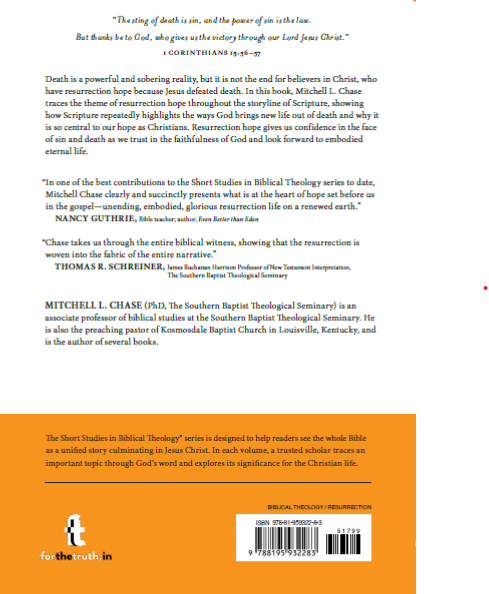


Divine Blessing and the Fullness of Life in the Presence of God - Short Studies in Biblical Theology - Paperback
ABNY Business Solutions Pvt. LtdOriginal price was: ₹799.00.₹249.00Current price is: ₹249.00.
Divine Blessing and the Fullness of Life in the Presence of God by William R. Osborne explains that biblical blessing is far more than material prosperity or spiritual benefits. True blessing is the fullness of life found in a relationship with God. Tracing the theme from creation to the new creation, the book shows that God’s greatest blessing is His presence with His people through Christ.
Part of the Short Studies in Biblical Theology Series
In stock
We Use the Word Every Day. Do We Know What It Actually Means?
Blessed. Blessing. Be blessed. Count your blessings.
Few words are more common in the vocabulary of everyday Christian life — and few are more rarely examined. Blessing shows up in testimonies about God’s provision, in praise songs and prayers, in the way Christians greet and part from one another. It has become so embedded in the texture of ordinary Christian speech that most believers would be hard pressed to define it carefully — or to articulate what the Bible actually means when it speaks of God blessing his people.
Divine Blessing and the Fullness of Life in the Presence of God by William Osborne is a concise, carefully argued, and genuinely illuminating study that answers this question from the Bible itself — tracing the theme of divine blessing from its origins in creation to its consummation in the new creation, and showing that what the Bible means by blessing is richer, more comprehensive, and more personally transforming than most Christians have ever realised.
Part of the Short Studies in Biblical Theology series from Crossway, it challenges the most common reductions of blessing and replaces them with a full-orbed, canonically grounded vision of what God has always been working toward when he blesses his people.
Beyond the Physical-Spiritual Divide
The most common way Christians think about blessing divides it into two categories: physical blessings (health, wealth, provision, safety — the kinds of blessing that Genesis 1 seems to emphasise) and spiritual blessings (forgiveness, adoption, the gift of the Spirit — the kinds of blessing that Ephesians 1 focuses on). This division seems natural and is deeply embedded in how many Christians read the Bible.
But Osborne shows that this division, however common, is actually a truncation of the biblical vision. A fuller biblical-theological approach — one that traces the blessing theme across the whole canon rather than cherry-picking individual texts — reveals that divine blessing has always been simultaneously physical, spiritual, and — most fundamentally — relational.
The relational dimension is the key. Blessing is not ultimately about gifts — whether physical or spiritual. It is about the Giver. It is about the fullness of life that comes from being in right relationship with the one who created us — dwelling in his presence, knowing him, being known by him, reflecting his image, and participating in his purposes. The gifts are real. But they are gifts of relationship, not substitutes for it.
The Pattern of Blessing Through Redemptive History
Osborne traces the blessing theme through the major stages and turning points of redemptive history, showing how the same pattern — blessing as the fullness of life in the presence of God — unfolds and develops from creation to consummation:
Creation — the original blessing God‘s blessing at creation is not merely a grant of fertility or prosperity. It is the gift of flourishing life in the presence of the Creator — the invitation to be fully what God made human beings to be, in the context of a perfect relationship with him. The creational blessing of Genesis 1–2 establishes the pattern that the whole of Scripture will work toward restoring and surpassing.
The fall — blessing forfeited The loss of Eden is not merely the loss of physical comfort or spiritual standing. It is the loss of the relational fullness that blessing was always about — exile from the presence of God, separation from the source of true flourishing. The whole subsequent history of redemption can be read as God’s work to restore what the fall cost his image-bearers.
Abraham — blessing renewed in promise The Abrahamic covenant is one of the most important blessing texts in the Bible — the promise that God would bless Abraham, make him a blessing, and bless all the families of the earth through him (Genesis 12:1–3). Osborne shows how this promise establishes blessing as the thread that will run through all of God’s redemptive dealings with humanity — the horizon toward which the whole story is moving.
Israel — blessing in the covenant community The blessing and curse structure of the Mosaic covenant, the blessing language of the Psalms, and the prophetic vision of restored blessing all contribute to a developing picture of what divine blessing looks like in the context of a covenant community — a people called to be a blessing to the nations by embodying the flourishing life that comes from dwelling in God’s presence.
Jesus — the one in whom all blessing comes Jesus is the one in whom all the blessing promises of Scripture converge and find their Yes and Amen (2 Corinthians 1:20). He is the seed of Abraham in whom all nations are blessed. He is the one who brings his people back into the presence of God — not merely as a restored Eden but as the new creation. And his resurrection is the firstfruits of the final blessing that the whole biblical story has been building toward.
New creation — blessing in its fullness The new creation of Revelation 21–22 is the consummation of the blessing theme — the fullness of life in the presence of God, permanently and completely realised. No more exile. No more separation. God with his people, dwelling together in the fullness of the relationship for which they were always made. This is what blessing has always been about.
What This Book Covers
- The nature of blessing — why the physical-spiritual division is a truncation of the biblical vision
- The relational heart of blessing — blessing as the fullness of life in God’s presence
- The blessing of creation — God’s original gift of flourishing life
- The fall as the forfeiture of blessing — exile from the presence of God
- The Abrahamic covenant — blessing renewed in promise
- Blessing in the covenant community of Israel — law, psalms, and prophets
- Jesus as the convergence of all blessing promises
- The new creation as the consummation of the blessing theme
- Practical implications — what a full-orbed understanding of blessing means for Christian life and worship today
What Readers Will Gain
- A clear, biblically grounded, and canonically comprehensive understanding of divine blessing across the whole of Scripture
- Freedom from the truncated physical-spiritual division that reduces blessing to either prosperity or spiritual transaction
- A richer, more personally transforming vision of what God is working toward when he blesses his people — the fullness of life in his presence
- A deeper appreciation of why the presence of God is the heart of every blessing — and why knowing him is better than any of his gifts
- Practical implications for how Christians understand testimony, prayer, worship, and the Christian hope
- A foundation for further engagement with biblical theology and the great themes that run through the whole of Scripture
Who Should Read This Book
- Christians who want to understand what the Bible actually means when it speaks of God’s blessing
- Anyone who has ever felt that Christian talk of blessing is vague, superficial, or divorced from genuine biblical grounding
- Pastors and preachers wanting to teach on blessing with biblical depth and canonical richness — particularly relevant for preaching on Genesis 1–2, the Abrahamic covenant, the Psalms, and the new creation
- Christians in India — where the language of blessing pervades both Christian and non-Christian religious life, and where a clear, biblically grounded distinction between genuine divine blessing and popular prosperity theology is urgently needed
- Theology students and seminary candidates studying biblical theology, the covenant, or the theology of creation and new creation
- Small group and Bible study leaders wanting a concise, accessible, and theologically serious resource on the theme of blessing
- Christians working through the Short Studies in Biblical Theology series
About the Author
William R. Osborne is Associate Professor of Biblical Studies at College of the Ozarks in Point Lookout, Missouri. He is a biblical scholar whose work focuses on the Old Testament and biblical theology, and his contribution to Divine Blessing and the Fullness of Life in the Presence of God reflects both his expertise in the Old Testament blessing texts and his gift for tracing the great themes of Scripture across the whole canon in a way that is both academically rigorous and genuinely accessible to ordinary Christian readers. His work is characterised by careful engagement with the biblical text, sensitivity to the canonical shape of Scripture, and a consistent concern that biblical theology should serve the worship and discipleship of the church.
About the Short Studies in Biblical Theology Series
Divine Blessing and the Fullness of Life in the Presence of God is part of the Short Studies in Biblical Theology series from Crossway — a collection of brief, academically rigorous, and accessible studies in the major themes of Scripture. Other titles in the series include The Sabbath as Rest and Hope for the People of God by Guy Prentiss Waters, and volumes covering the kingdom of God, the temple, the covenant, and more — making it one of the most complete and reliable libraries of biblical theology available for Christians at every level of engagement.
- Weight : 0.13 kg
- Dimensions : 20.3 × 13 × 1 cm
- ISBN : 9788195924363
- Language : English
- Pages : 160
- Publisher : FOR THE TRUTH
- Age range : 14-99
- Format : Paperback
- HSN : 4901
Only logged in customers who have purchased this product may leave a review.
Related products
-

The Person of Christ: An Introduction - Short Studies in Systematic Theology - Paperback
Original price was: ₹799.00.₹249.00Current price is: ₹249.00. -
The Son of God and the New Creation - Short Studies in Biblical Theology - Paperback
Original price was: ₹799.00.₹249.00Current price is: ₹249.00. -
The Trinity: An Introduction - Short Studies in Systematic Theology - Paperback
Original price was: ₹799.00.₹249.00Current price is: ₹249.00. -
The Holy Spirit: An Introduction - Short Studies in Systematic Theology - Paperback
Original price was: ₹799.00.₹299.00Current price is: ₹299.00.
Reviews
There are no reviews yet.